Below you will find frequently asked questions, divided over four different groups. First, a generic FAQ with information applying to a broad set of master degrees and then more specific FAQs applying to specific programs only.
FAQ for all master degrees

“Signal Processing in the AI era” was the tagline of this year’s IEEE International Conference on Acoustics, Speech and Signal Processing, taking place in Rhodes, Greece.
In this context, Brent de Weerdt, Xiangyu Yang, Boris Joukovsky, Alex Stergiou and Nikos Deligiannis presented ETRO’s research during poster sessions and oral presentations, with novel ways to process and understand graph, video, and audio data. Nikos Deligiannis chaired a session on Graph Deep Learning, attended the IEEE T-IP Editorial Board Meeting, and had the opportunity to meet with collaborators from the VUB-Duke-Ugent-UCL joint lab.
Featured articles:
- De Weerdt, B. et al., “Designing Transformer Networks for Sparse Recovery of Sequential Data Using Deep Unfolding” (https://ieeexplore.ieee.org/abstract/document/10094712)
- Yang X. et al., “Relevance Propagation through Deep Conditional Random Fields” (https://ieeexplore.ieee.org/abstract/document/10095075)
- Stergiou A. et al., “Play it back: Iterative attention for audio recognition” (https://ieeexplore.ieee.org/abstract/document/10096532, developed at the University of Bristol)

Prof. Nikos Deligiannis (VUB-ETRO) and Prof. Jean-François Argacha (UZ Brussel-CHVZ) presented VUB’s activities and outcomes within Work Package 3 of the Horizon ENACT project at AIOTI Days 2026, taking place in Florence on 28–29 September 2026.
Prof. Deligiannis gave a talk entitled “AI Models for Population-Based Exposome-Driven Hospitalisation Risk Prediction in ENACT,” highlighting the use of AI models to assess exposome-related hospitalisation risks (attached poster).
Prof. Argacha presented “Assessing Exposome-related Risk of Non-Communicable Diseases in ENACT: From Myocardial Infarction to the Next Steps,” focusing on the assessment of exposome-related risks for non-communicable diseases and future research directions within ENACT.
More information about AIOTI Days 2026 is available at https://aioti.eu/aioti-days-2026/.
More information about the ENACT project is available at https://enact-he.eu/
Gisteren hebben we tijdens een zonovergoten avond het ecosysteem van Green Energy Park vzw en FACT – VUB samengebracht voor een interessant netwerkevent.
Een inspirerende uitleg over onze ambities, de visie van Siemens over het belang van intense samenwerking, overtuigende pitches van de onderzoeksgroepen van FACT – VUB, een infosessie over het Interreg-project EMR H2-HUBs, verschillende demo’s … een mooi programma waar iedereen zijn gading in kon vinden.
De avond werd afgesloten onder een stralende zon waardoor het netwerken net dat tikkeltje aangenamer was.
Bedankt aan onze sprekers Inne Peersman, Siperius Yves, Maarten Messagie, Cedric De Cauwer, Gabriela Barrera, Md Sazzad Hosen, Christof Devriendt, Aurélie Bellemans, Lukas Berger, Tom Van Assche, Johan Stiens, Hubert Rahier en onze demostandhouders Priva, Fluvius, Allspark, Flux50, ABB, EVERGi, ETRO VUB, Physical Chemistry and Polymer Science en VUB Architectural Engineering.
Lesley De Cruz and her team received the EMS Outreach & Communication Award 2026 for their project: Instant AI Urban Climate Modelling and LEGO
This outstanding initiative successfully bridges complex meteorological science and public outreach, making the invisible dynamics of the Urban Heat Island (UHI) effect both tangible and actionable for audiences of all ages, with intuitive understanding of urban planning and climate resilience.
Full text on: https://www.emetsoc.org/ems-outreach-communication-award-2026-instant-ai-urban-climate-modelling-and-lego/


ETRO’s Video for the Brussels Edition of Flanders Technology and Innovation Festival.
Help us advance research for better walking
Do you walk like this?
Shuffling Gait
Short steps with minimal lifting of the feet
Unilateral Foot Drop
Landing on the front of the foot rather than the heel
Then contact us at ✉️elena.botti@vub.be
Not sure? You don’t need to diagnose yourself, let’s organise a video call together! Send us an email at elena.botti@vub.be and we will check if you are eligible.
What to expect
We want to make gait analysis easier and more accessible. We are comparing a small wearable movement sensor (IMU) with a laboratory motion-capture system (Vicon) to improve methods for analysing different walking patterns. The setup is visible in the pictures below, with the IMU that is the little sensor on the patient’s sacrum and Vicon that needs little markers placed on your body.
Image of the gait lab (can’t be previewed)
Image of the marker placement (can’t be previewed)
To summarise
📍One visit at the Brubotics Rehabilitation Research Center (BRRC) – Laarbeeklaan 121, 1090 Jette, Brussels
⏱️About 2 hours from when you walk in, to the end of the recording session
🎽Wear gym shorts or underwear so we can place the markers. You will walk barefoot
🏁 15 walks of 10 metres: 5 slow, 5 normal, and 5 fast, at your own pace
✔️Finished! Before you know it you will be done, no treatment and no follow up. You will have contributed to research!🔬
Contact Information
PhD Candidate Elena Botti
elena.botti@vub.be
Dr. Redona Brahimetaj
redona.brahimetaj@vub.be
Prof. Bart Jansen
bart.jansen@vub.be
Prof. Eva Swinnen
eva.swinnen@vub.be
Prof. Lesley De Cruz and her team have been selected for the 2026 EMS (European Meteorological Society) Outreach & Communication Award for their innovative workshop that makes urban climate science accessible and engaging. The project uses LEGO bricks and real-time AI modeling to help participants understand how urban design choices affect local temperature patterns.
The workshop operates through a straightforward cycle: participants build miniature cities with LEGO blocks, a custom Temperature Booth scans the physical model, an AI-powered urban climate model processes the data instantly, and participants immediately observe how design modifications (such as replacing parking lots with parks) alter heat distribution patterns. By focusing on nighttime heat retention, the workshop provides intuitive insights into urban planning and climate resilience without requiring prior scientific background.
Since launch, the project has engaged thousands of participants at public events and science festivals. It has also earned recognition in academic circles, including a second place for Best Student Presentation at the 12th International Conference on Urban Climate (2025) and the Royal Flemish Academy’s Science Communication Prize.
The interdisciplinary team includes researchers from VUB and partner institutions RMI, UGent and KdG. The work demonstrates how combining AI, hands-on engagement, and scientific rigor can bridge the gap between complex climate science and public understanding. The award will be presented at the EMS Annual Meeting in Utrecht on September 7, 2026.
This workshop was made possible thanks to funding from Innoviris.
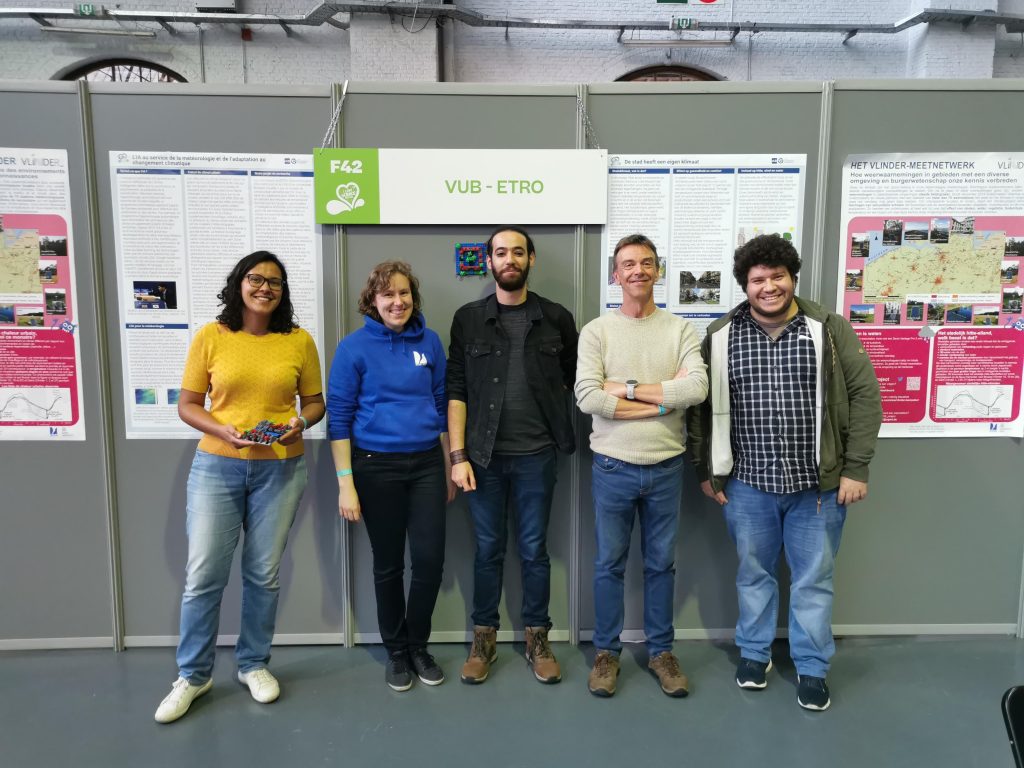
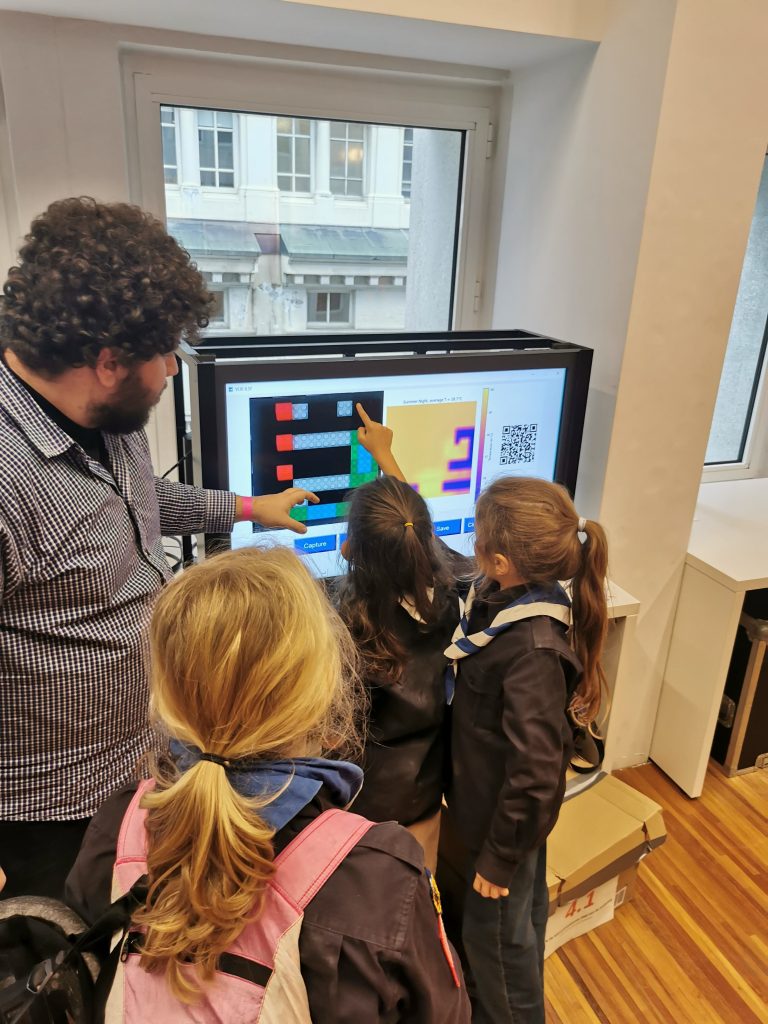
ETRO will be represented at Brussels Climate Week 2026 by Prof. Johan Stiens, who will take part as one of the VUB speakers during the event. Brussels Climate Week brings together experts working on climate, energy, sustainability and the broader transition agenda. The event will take place in Brussels from 12 to 16 October 2026, offering an opportunity to exchange ideas, connect with partners and contribute to the discussion on innovation and decarbonisation.
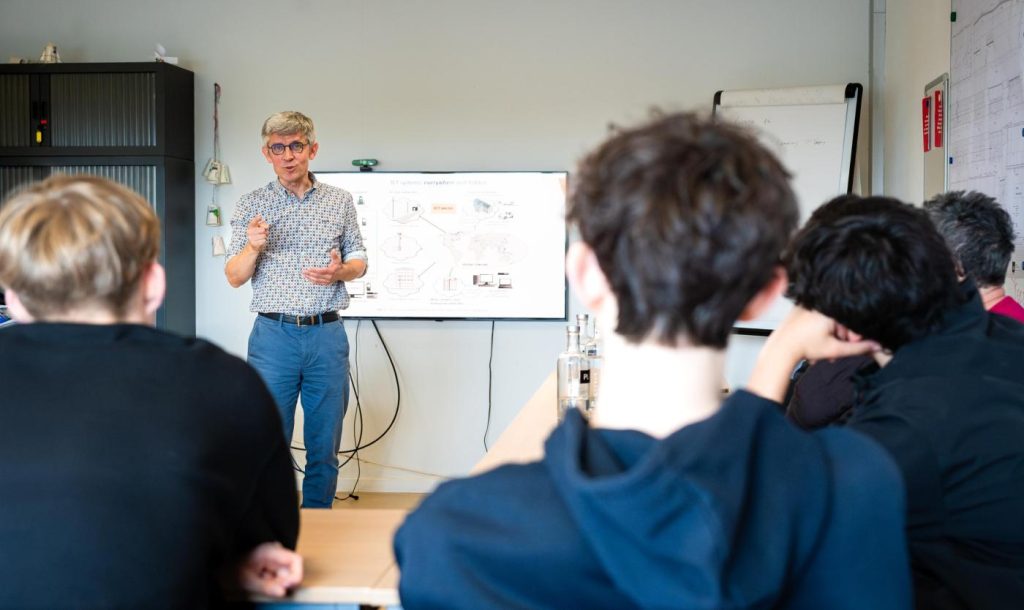
On 11 May, the Green Energy Park in Zellik welcomed four fifth-year secondary school classes for a Climate Technology Day organised by VUB. Pupils from Sint-Jozefinstituut Ternat, Koninklijk Atheneum Etterbeek and ZAVO Zaventem took part in a varied STEM programme, discovering how engineering, digital technologies and climate innovation come together in the search for sustainable solutions.
A central contribution came from ETRO VUB, represented by Professor Johan Stiens. In his session on the Internet of Things and the transformative role of Big Data, Stiens made a strong case for engineering as a discipline with enormous societal impact. Through concrete examples from everyday life — from laptops and transport to the buildings around us — he showed how engineers shape the world, often invisibly, and why young people should be encouraged to choose engineering and STEM studies.
The day also introduced pupils to broader VUB expertise in climate technology, including electric mobility, wind energy and the Multi-Energy Living Lab at the Green Energy Park. Demonstrations such as the VUB Formula Student race car and the Smart Digital Table Top helped translate complex energy systems into tangible, inspiring experiences for the students.
By combining scientific insight with hands-on demonstrations, the Climate Technology Day gave pupils a vivid impression of what engineering can mean for the future. For ETRO VUB and Professor Johan Stiens, the event was also an opportunity to highlight the importance of electronics, informatics, IoT and data-driven innovation in addressing society’s major challenges — and to motivate a new generation to become part of that effort.
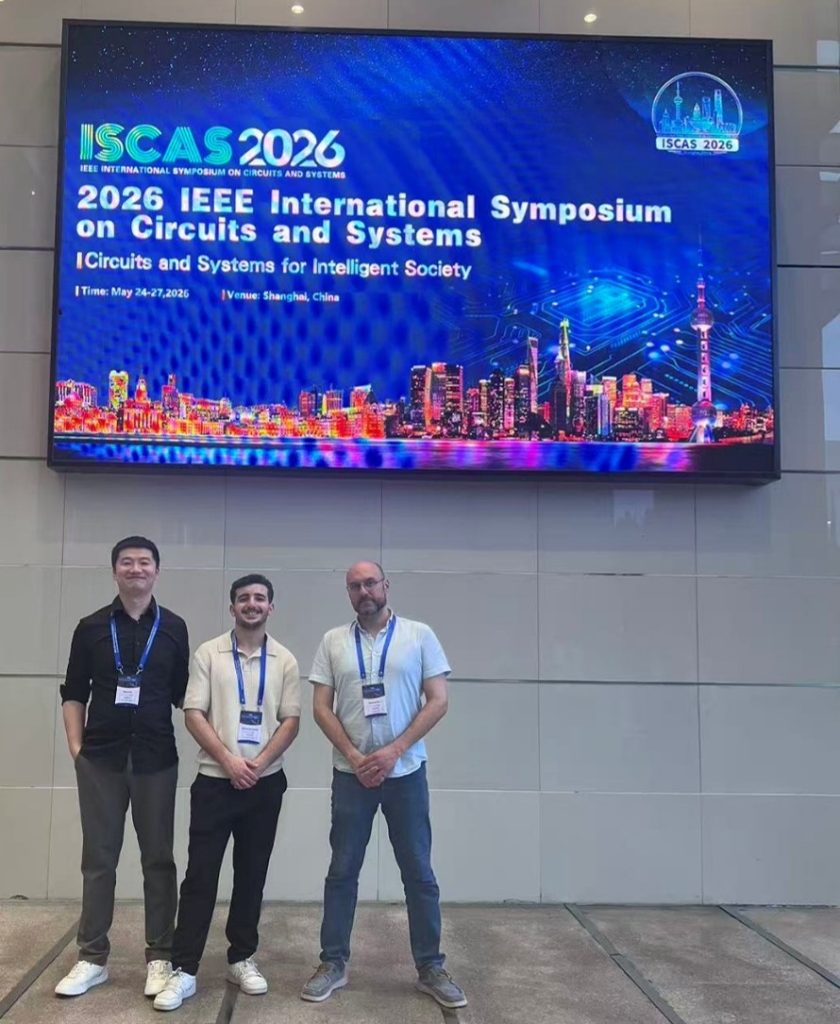
Ruiqi Chen, Abdessamad Nassihi, and Bruno da Silva proudly represented ETRO at the International Symposium on Circuits and Systems (ISCAS 2026) in Shanghai, one of the leading conferences in the field of circuits and systems. They presented two major contributions pushing the boundaries of power-efficient edge computing.
Featured articles:
- “Power-Efficient Spiking Conversion of Deep Unfolded Transformers”; Ahmed Sadaqa
- “IDSPfree: An FPGA-Based Intrusion Detection System with DSP-Free Design”; Abdessamad Nassihi
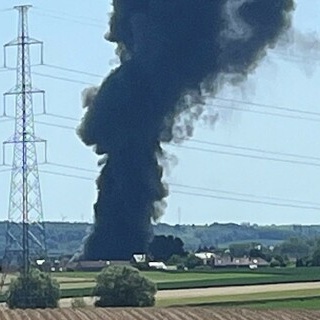
Researchers involved in the European ENACT project have shown how wearable environmental sensing technology can help capture real-world air-quality events. Following the industrial fire that broke out in Tubize on 25 May 2026, ENACT environmental wearables deployed in Halle, south of Brussels, recorded clear changes in local air-pollution signals, including increases in nitrogen dioxide and volatile organic compound measurements.
The VUB ETRO department contributes to ENACT’s work on environmental monitoring technologies and data-driven analysis, supporting the development of tools that can help researchers better understand how environmental exposure affects health. The measurements collected during this incident provide a concrete example of how wearable sensing can complement official monitoring networks and contribute to future exposomic risk assessment.
Further analysis will refine the raw sensor readings by comparing them with reference-grade air-quality data from the IRCELine monitoring network.
Read the full ENACT news item: https://enact-he.eu/industrial-fire-air-quality-monitoring-brussels/
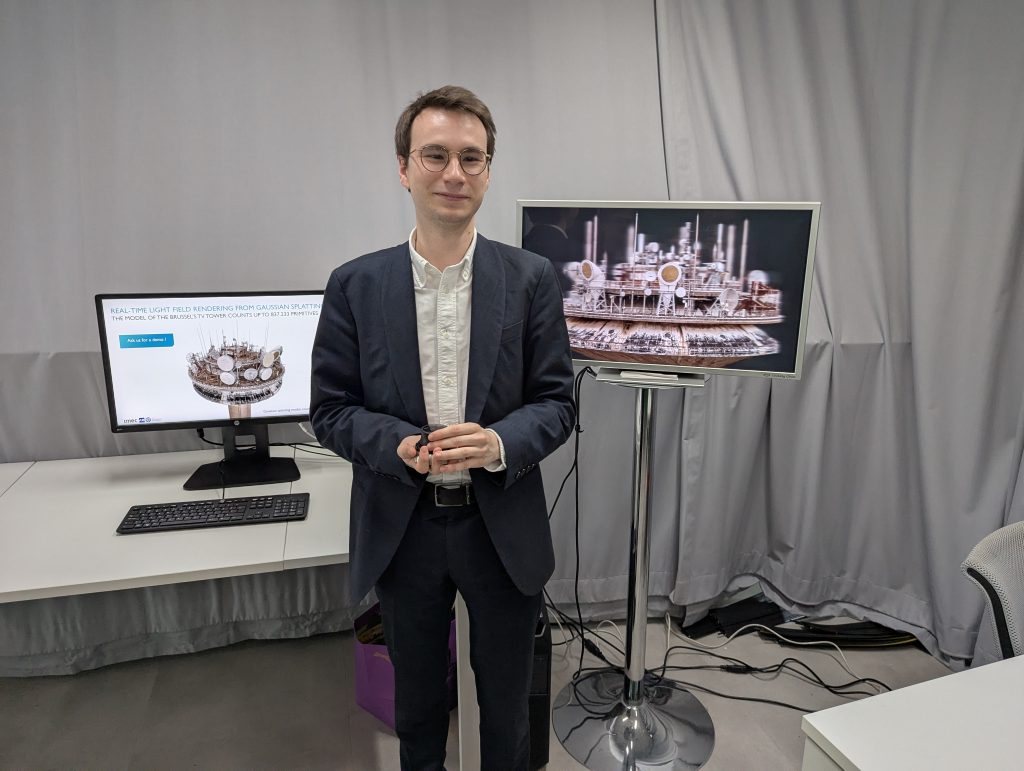
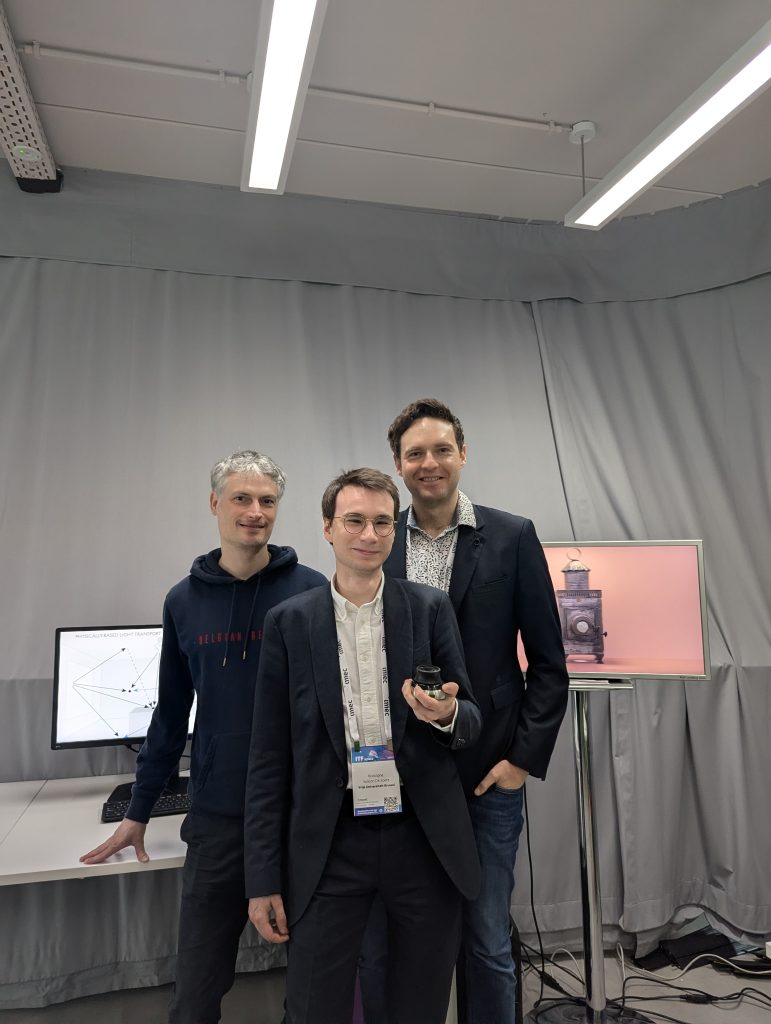
ETRO-VUB was represented at imec’s ITF World 2026, participating in the “The Future of Media and Entertainment” event.
Rodolphe Valicon De Soete, Colas Schretter, and David Blinder contributed to the sessions on the StageTech Flanders volumetric capturing roadmap and holographic display technology.
They presented a demo showcasing interactive rendering using Gaussian mixture models and holography on a light-field display. Many thanks to Rodolphe and Colas for preparing and presenting the demo at ITF World!
Introduction
This guide explains how to install and configure WireGuard with an MFA overlay using Defguard. The setup consists of three main steps, to be executed after requesting a token from ETRO_ICT@vub.be.
- Activate MFA/TOTP on your account
This secures your Defguard account with two-factor authentication before you configure VPN access. - Install the Defguard client
This installs the application needed to manage and connect to the WireGuard VPN from your device. - Configure and connect to the VPN
This links your device to Defguard using the provided enrollment token and allows you to connect securely to the Brussels VPN location.
Once these steps are completed, your device will be ready to connect to the VPN using WireGuard with MFA authentication.
1) Activate your account with MFA, TOTP
Go to:
Log in with your ETROVUB credentials. Use only your username, without @etrovub.be.
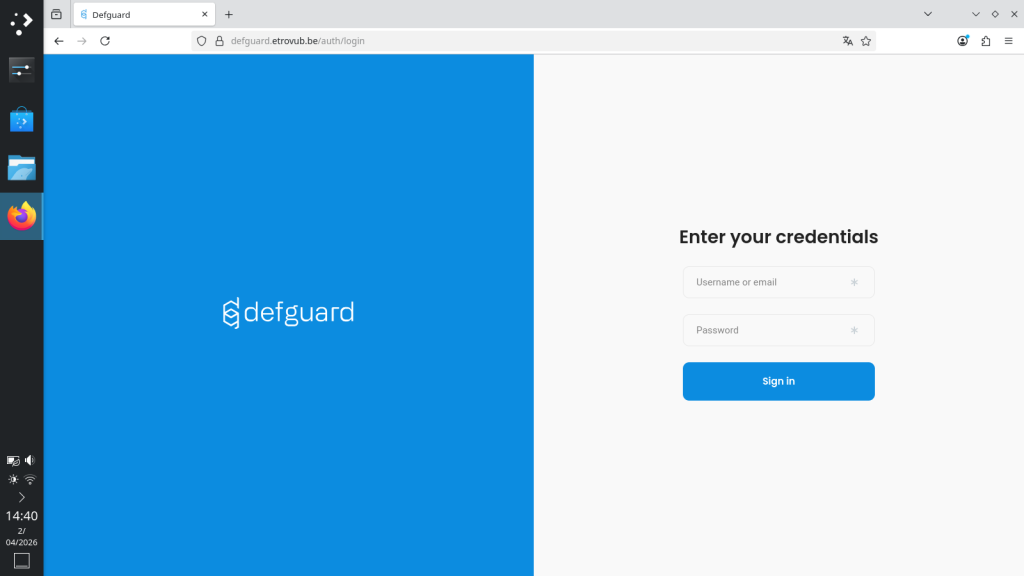
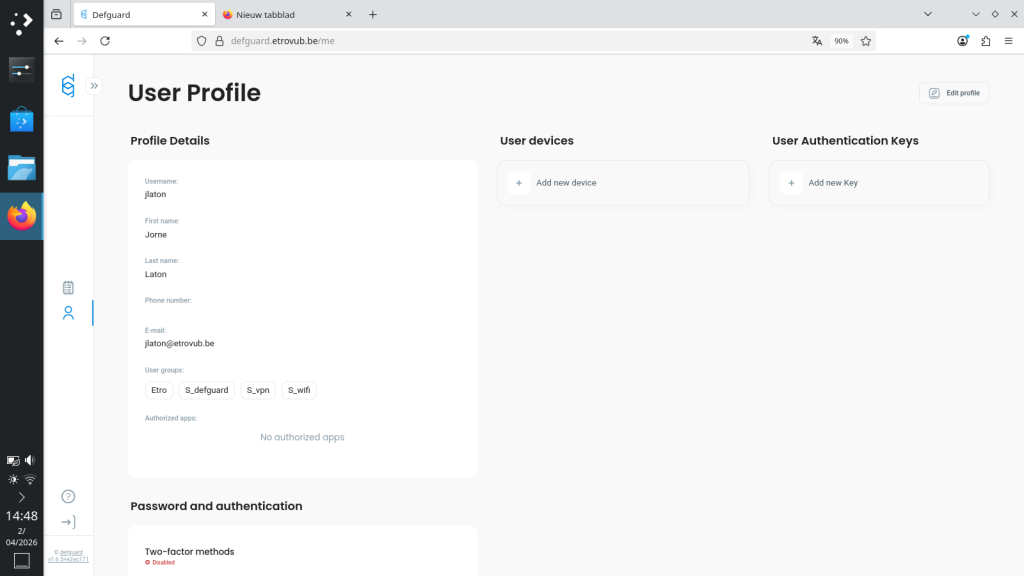
Click Edit profile in the top-right corner.
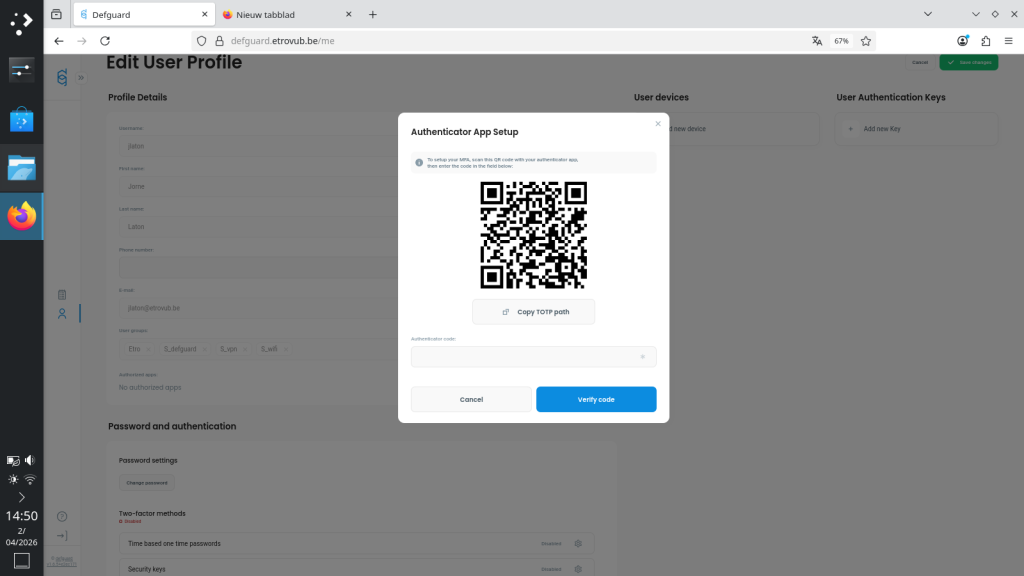
Enable TOTP — Time-Based One-Time Password — as your two-factor authentication method by clicking on the gear wheel next to TOTP. You may need to do this twice.
Use an authenticator app, or equivalent, to register Defguard by scanning the QR code. Once registered, enter the one-time password code to confirm.
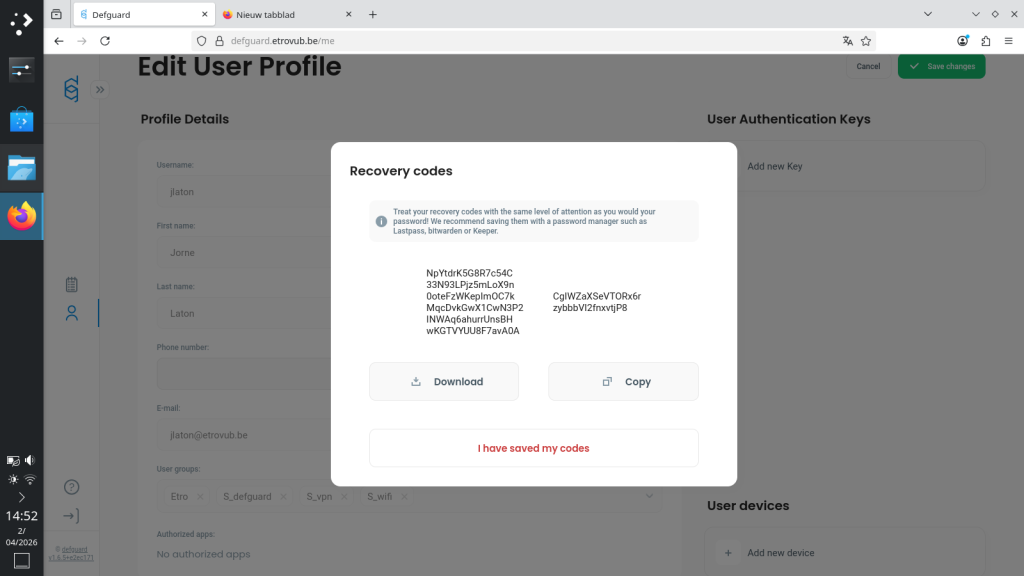
Recovery codes are not strictly necessary, as ICT can intervene if needed. Click I have saved my codes.
Do not forget to save your changes.
If you are logged out, log back in using your authentication code.
2) Install your Defguard client
Go to::
https://enroll.etrovub.be
Start the enrollment process.
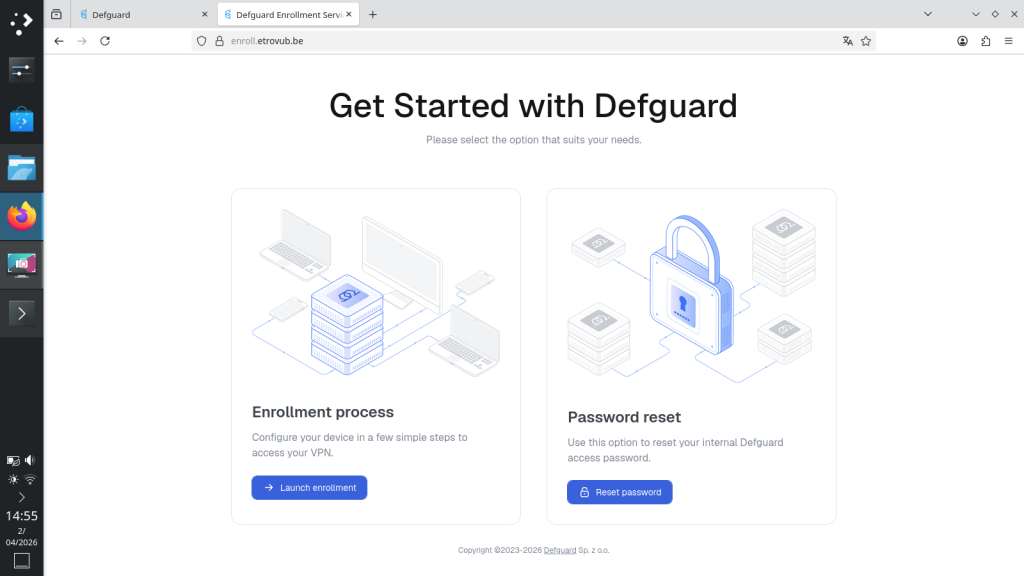
Click Launch enrollment.
You will be asked to enter the token sent by your administrator.
Download and install the client for your operating system.
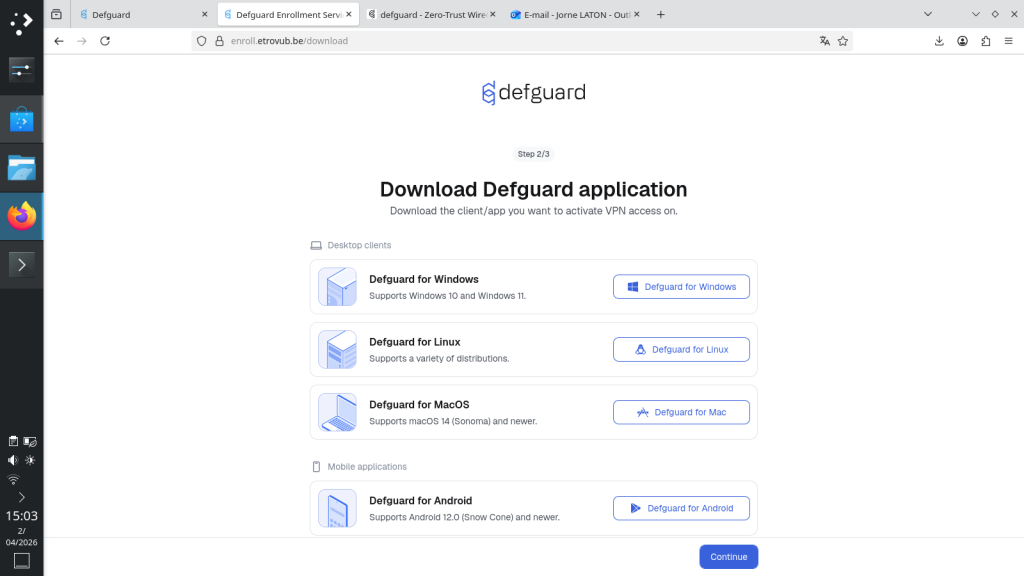
Once the client has been installed, open it
3) Configuration of the connection in the client
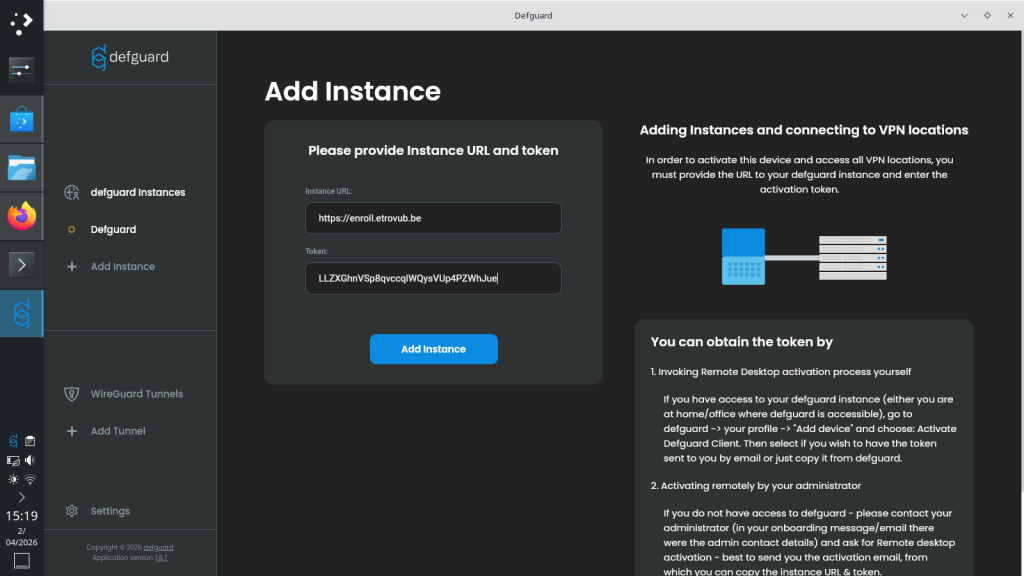
In the Defguard client, click Add instance in the left menu bar.

Enter the URL and token you received from your administrator.
For each supplementary device please request a new token at ETRO_ICT@vub.be
Choose a name for your device.
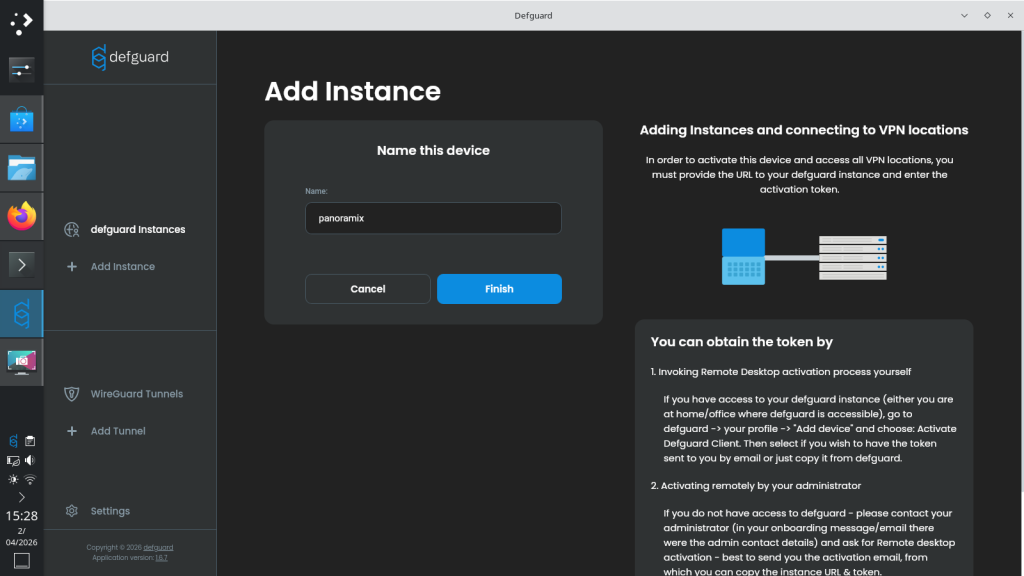
Once the instance has been created, click Connect for the Brussels location.
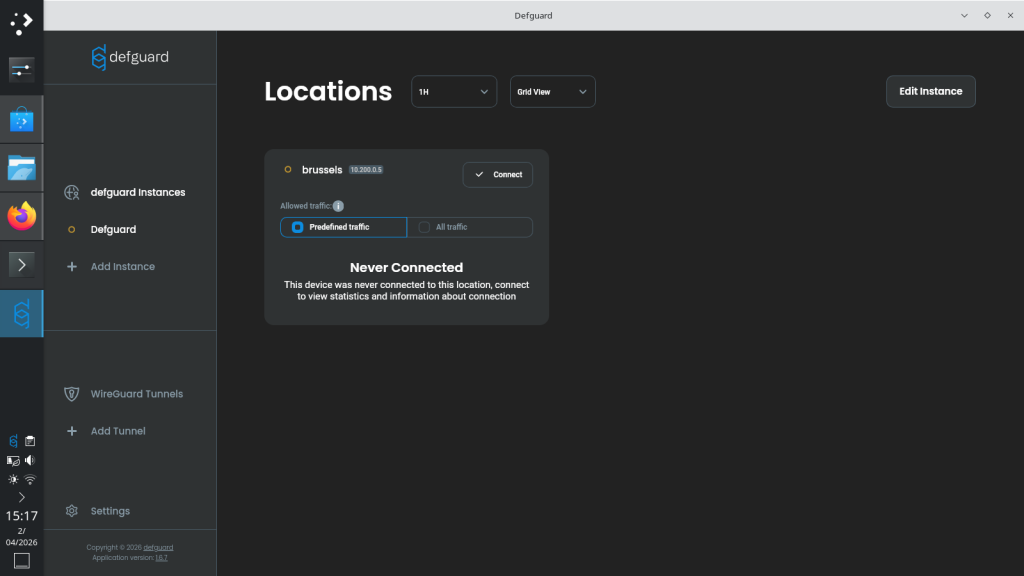
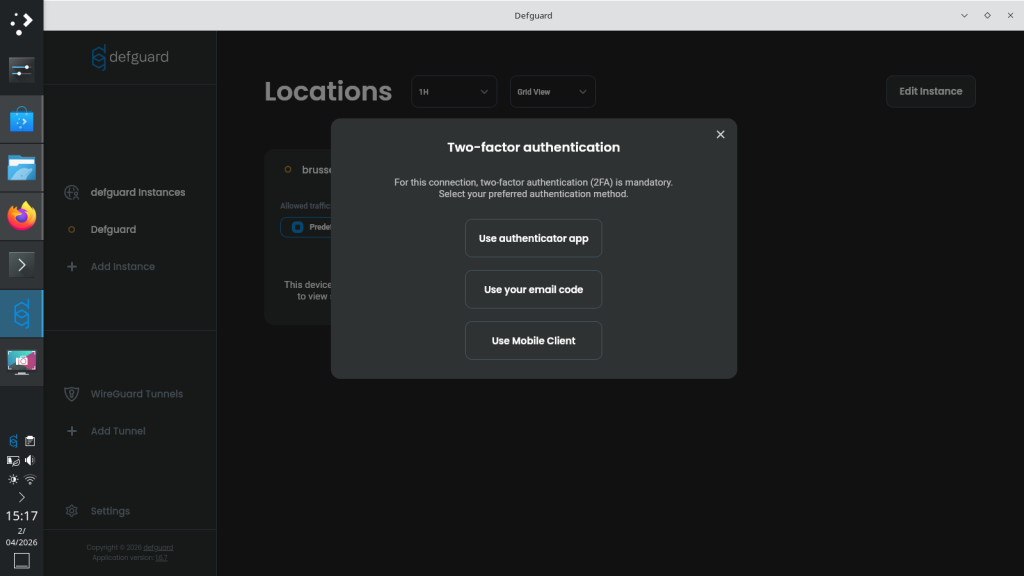
Use MFA to authenticate.
You are now successfully connected.
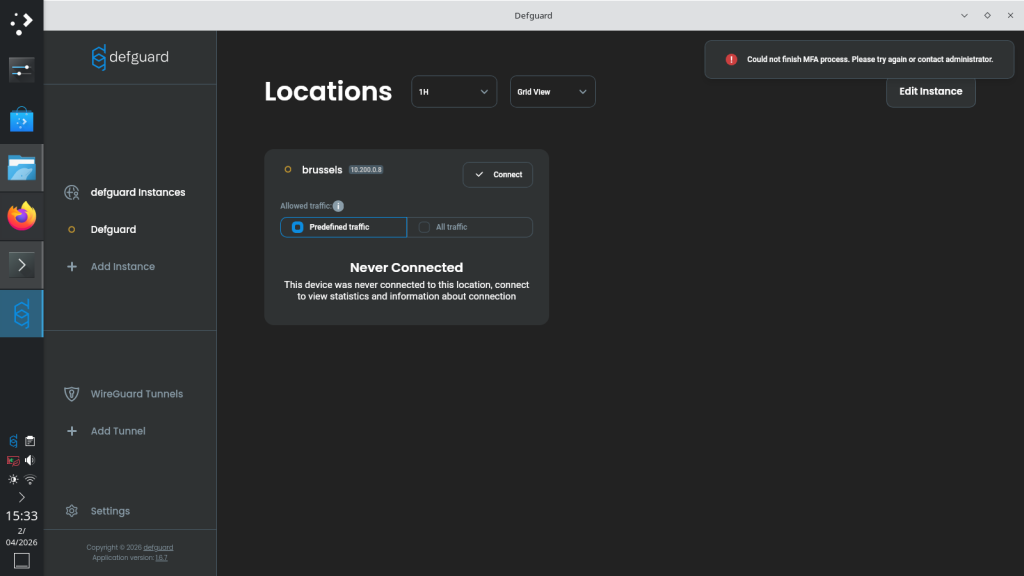
Good luck! You are virtually there!
4) Your installation not going to plan ?
Perhaps one of the remedies below helps
- Try uninstalling and reinstalling with the Defguard client with admin rights
- Try installing the client directly from e.g. defguard.net or the app store
- Ubuntu needs an extra package;
sudo apt install resolvconf - A token is only valid for 24h, request a new one
- Arch Linux with Nvidia GPU gives white screen? `GDK_BACKEND=x11 WEBKIT_DISABLE_DMABUF_RENDERER=1 defguard-client` does the trick.
FAQ for the Master Applied Computer Science
“Signal Processing in the AI era” was the tagline of this year’s IEEE International Conference on Acoustics, Speech and Signal Processing, taking place in Rhodes, Greece.
In this context, Brent de Weerdt, Xiangyu Yang, Boris Joukovsky, Alex Stergiou and Nikos Deligiannis presented ETRO’s research during poster sessions and oral presentations, with novel ways to process and understand graph, video, and audio data. Nikos Deligiannis chaired a session on Graph Deep Learning, attended the IEEE T-IP Editorial Board Meeting, and had the opportunity to meet with collaborators from the VUB-Duke-Ugent-UCL joint lab.
Featured articles:
- De Weerdt, B. et al., “Designing Transformer Networks for Sparse Recovery of Sequential Data Using Deep Unfolding” (https://ieeexplore.ieee.org/abstract/document/10094712)
- Yang X. et al., “Relevance Propagation through Deep Conditional Random Fields” (https://ieeexplore.ieee.org/abstract/document/10095075)
- Stergiou A. et al., “Play it back: Iterative attention for audio recognition” (https://ieeexplore.ieee.org/abstract/document/10096532, developed at the University of Bristol)
Prof. Nikos Deligiannis (VUB-ETRO) and Prof. Jean-François Argacha (UZ Brussel-CHVZ) presented VUB’s activities and outcomes within Work Package 3 of the Horizon ENACT project at AIOTI Days 2026, taking place in Florence on 28–29 September 2026.
Prof. Deligiannis gave a talk entitled “AI Models for Population-Based Exposome-Driven Hospitalisation Risk Prediction in ENACT,” highlighting the use of AI models to assess exposome-related hospitalisation risks (attached poster).
Prof. Argacha presented “Assessing Exposome-related Risk of Non-Communicable Diseases in ENACT: From Myocardial Infarction to the Next Steps,” focusing on the assessment of exposome-related risks for non-communicable diseases and future research directions within ENACT.
More information about AIOTI Days 2026 is available at https://aioti.eu/aioti-days-2026/.
More information about the ENACT project is available at https://enact-he.eu/
Gisteren hebben we tijdens een zonovergoten avond het ecosysteem van Green Energy Park vzw en FACT – VUB samengebracht voor een interessant netwerkevent.
Een inspirerende uitleg over onze ambities, de visie van Siemens over het belang van intense samenwerking, overtuigende pitches van de onderzoeksgroepen van FACT – VUB, een infosessie over het Interreg-project EMR H2-HUBs, verschillende demo’s … een mooi programma waar iedereen zijn gading in kon vinden.
De avond werd afgesloten onder een stralende zon waardoor het netwerken net dat tikkeltje aangenamer was.
Bedankt aan onze sprekers Inne Peersman, Siperius Yves, Maarten Messagie, Cedric De Cauwer, Gabriela Barrera, Md Sazzad Hosen, Christof Devriendt, Aurélie Bellemans, Lukas Berger, Tom Van Assche, Johan Stiens, Hubert Rahier en onze demostandhouders Priva, Fluvius, Allspark, Flux50, ABB, EVERGi, ETRO VUB, Physical Chemistry and Polymer Science en VUB Architectural Engineering.
Lesley De Cruz and her team received the EMS Outreach & Communication Award 2026 for their project: Instant AI Urban Climate Modelling and LEGO
This outstanding initiative successfully bridges complex meteorological science and public outreach, making the invisible dynamics of the Urban Heat Island (UHI) effect both tangible and actionable for audiences of all ages, with intuitive understanding of urban planning and climate resilience.
Full text on: https://www.emetsoc.org/ems-outreach-communication-award-2026-instant-ai-urban-climate-modelling-and-lego/
ETRO’s Video for the Brussels Edition of Flanders Technology and Innovation Festival.
Help us advance research for better walking
Do you walk like this?
Shuffling Gait
Short steps with minimal lifting of the feet
Unilateral Foot Drop
Landing on the front of the foot rather than the heel
Then contact us at ✉️elena.botti@vub.be
Not sure? You don’t need to diagnose yourself, let’s organise a video call together! Send us an email at elena.botti@vub.be and we will check if you are eligible.
What to expect
We want to make gait analysis easier and more accessible. We are comparing a small wearable movement sensor (IMU) with a laboratory motion-capture system (Vicon) to improve methods for analysing different walking patterns. The setup is visible in the pictures below, with the IMU that is the little sensor on the patient’s sacrum and Vicon that needs little markers placed on your body.
Image of the gait lab (can’t be previewed)
Image of the marker placement (can’t be previewed)
To summarise
📍One visit at the Brubotics Rehabilitation Research Center (BRRC) – Laarbeeklaan 121, 1090 Jette, Brussels
⏱️About 2 hours from when you walk in, to the end of the recording session
🎽Wear gym shorts or underwear so we can place the markers. You will walk barefoot
🏁 15 walks of 10 metres: 5 slow, 5 normal, and 5 fast, at your own pace
✔️Finished! Before you know it you will be done, no treatment and no follow up. You will have contributed to research!🔬
Contact Information
PhD Candidate Elena Botti
elena.botti@vub.be
Dr. Redona Brahimetaj
redona.brahimetaj@vub.be
Prof. Bart Jansen
bart.jansen@vub.be
Prof. Eva Swinnen
eva.swinnen@vub.be
Prof. Lesley De Cruz and her team have been selected for the 2026 EMS (European Meteorological Society) Outreach & Communication Award for their innovative workshop that makes urban climate science accessible and engaging. The project uses LEGO bricks and real-time AI modeling to help participants understand how urban design choices affect local temperature patterns.
The workshop operates through a straightforward cycle: participants build miniature cities with LEGO blocks, a custom Temperature Booth scans the physical model, an AI-powered urban climate model processes the data instantly, and participants immediately observe how design modifications (such as replacing parking lots with parks) alter heat distribution patterns. By focusing on nighttime heat retention, the workshop provides intuitive insights into urban planning and climate resilience without requiring prior scientific background.
Since launch, the project has engaged thousands of participants at public events and science festivals. It has also earned recognition in academic circles, including a second place for Best Student Presentation at the 12th International Conference on Urban Climate (2025) and the Royal Flemish Academy’s Science Communication Prize.
The interdisciplinary team includes researchers from VUB and partner institutions RMI, UGent and KdG. The work demonstrates how combining AI, hands-on engagement, and scientific rigor can bridge the gap between complex climate science and public understanding. The award will be presented at the EMS Annual Meeting in Utrecht on September 7, 2026.
This workshop was made possible thanks to funding from Innoviris.
ETRO will be represented at Brussels Climate Week 2026 by Prof. Johan Stiens, who will take part as one of the VUB speakers during the event. Brussels Climate Week brings together experts working on climate, energy, sustainability and the broader transition agenda. The event will take place in Brussels from 12 to 16 October 2026, offering an opportunity to exchange ideas, connect with partners and contribute to the discussion on innovation and decarbonisation.
On 11 May, the Green Energy Park in Zellik welcomed four fifth-year secondary school classes for a Climate Technology Day organised by VUB. Pupils from Sint-Jozefinstituut Ternat, Koninklijk Atheneum Etterbeek and ZAVO Zaventem took part in a varied STEM programme, discovering how engineering, digital technologies and climate innovation come together in the search for sustainable solutions.
A central contribution came from ETRO VUB, represented by Professor Johan Stiens. In his session on the Internet of Things and the transformative role of Big Data, Stiens made a strong case for engineering as a discipline with enormous societal impact. Through concrete examples from everyday life — from laptops and transport to the buildings around us — he showed how engineers shape the world, often invisibly, and why young people should be encouraged to choose engineering and STEM studies.
The day also introduced pupils to broader VUB expertise in climate technology, including electric mobility, wind energy and the Multi-Energy Living Lab at the Green Energy Park. Demonstrations such as the VUB Formula Student race car and the Smart Digital Table Top helped translate complex energy systems into tangible, inspiring experiences for the students.
By combining scientific insight with hands-on demonstrations, the Climate Technology Day gave pupils a vivid impression of what engineering can mean for the future. For ETRO VUB and Professor Johan Stiens, the event was also an opportunity to highlight the importance of electronics, informatics, IoT and data-driven innovation in addressing society’s major challenges — and to motivate a new generation to become part of that effort.
Ruiqi Chen, Abdessamad Nassihi, and Bruno da Silva proudly represented ETRO at the International Symposium on Circuits and Systems (ISCAS 2026) in Shanghai, one of the leading conferences in the field of circuits and systems. They presented two major contributions pushing the boundaries of power-efficient edge computing.
Featured articles:
- “Power-Efficient Spiking Conversion of Deep Unfolded Transformers”; Ahmed Sadaqa
- “IDSPfree: An FPGA-Based Intrusion Detection System with DSP-Free Design”; Abdessamad Nassihi
Researchers involved in the European ENACT project have shown how wearable environmental sensing technology can help capture real-world air-quality events. Following the industrial fire that broke out in Tubize on 25 May 2026, ENACT environmental wearables deployed in Halle, south of Brussels, recorded clear changes in local air-pollution signals, including increases in nitrogen dioxide and volatile organic compound measurements.
The VUB ETRO department contributes to ENACT’s work on environmental monitoring technologies and data-driven analysis, supporting the development of tools that can help researchers better understand how environmental exposure affects health. The measurements collected during this incident provide a concrete example of how wearable sensing can complement official monitoring networks and contribute to future exposomic risk assessment.
Further analysis will refine the raw sensor readings by comparing them with reference-grade air-quality data from the IRCELine monitoring network.
Read the full ENACT news item: https://enact-he.eu/industrial-fire-air-quality-monitoring-brussels/
ETRO-VUB was represented at imec’s ITF World 2026, participating in the “The Future of Media and Entertainment” event.
Rodolphe Valicon De Soete, Colas Schretter, and David Blinder contributed to the sessions on the StageTech Flanders volumetric capturing roadmap and holographic display technology.
They presented a demo showcasing interactive rendering using Gaussian mixture models and holography on a light-field display. Many thanks to Rodolphe and Colas for preparing and presenting the demo at ITF World!
Introduction
This guide explains how to install and configure WireGuard with an MFA overlay using Defguard. The setup consists of three main steps, to be executed after requesting a token from ETRO_ICT@vub.be.
- Activate MFA/TOTP on your account
This secures your Defguard account with two-factor authentication before you configure VPN access. - Install the Defguard client
This installs the application needed to manage and connect to the WireGuard VPN from your device. - Configure and connect to the VPN
This links your device to Defguard using the provided enrollment token and allows you to connect securely to the Brussels VPN location.
Once these steps are completed, your device will be ready to connect to the VPN using WireGuard with MFA authentication.
1) Activate your account with MFA, TOTP
Go to:
Log in with your ETROVUB credentials. Use only your username, without @etrovub.be.
Click Edit profile in the top-right corner.
Enable TOTP — Time-Based One-Time Password — as your two-factor authentication method by clicking on the gear wheel next to TOTP. You may need to do this twice.
Use an authenticator app, or equivalent, to register Defguard by scanning the QR code. Once registered, enter the one-time password code to confirm.
Recovery codes are not strictly necessary, as ICT can intervene if needed. Click I have saved my codes.
Do not forget to save your changes.
If you are logged out, log back in using your authentication code.
2) Install your Defguard client
Go to::
https://enroll.etrovub.be
Start the enrollment process.
Click Launch enrollment.
You will be asked to enter the token sent by your administrator.
Download and install the client for your operating system.
Once the client has been installed, open it
3) Configuration of the connection in the client
In the Defguard client, click Add instance in the left menu bar.
Enter the URL and token you received from your administrator.
For each supplementary device please request a new token at ETRO_ICT@vub.be
Choose a name for your device.
Once the instance has been created, click Connect for the Brussels location.
Use MFA to authenticate.
You are now successfully connected.
Good luck! You are virtually there!
4) Your installation not going to plan ?
Perhaps one of the remedies below helps
- Try uninstalling and reinstalling with the Defguard client with admin rights
- Try installing the client directly from e.g. defguard.net or the app store
- Ubuntu needs an extra package;
sudo apt install resolvconf - A token is only valid for 24h, request a new one
- Arch Linux with Nvidia GPU gives white screen? `GDK_BACKEND=x11 WEBKIT_DISABLE_DMABUF_RENDERER=1 defguard-client` does the trick.
FAQ for the Master Biomedical Engineering
“Signal Processing in the AI era” was the tagline of this year’s IEEE International Conference on Acoustics, Speech and Signal Processing, taking place in Rhodes, Greece.
In this context, Brent de Weerdt, Xiangyu Yang, Boris Joukovsky, Alex Stergiou and Nikos Deligiannis presented ETRO’s research during poster sessions and oral presentations, with novel ways to process and understand graph, video, and audio data. Nikos Deligiannis chaired a session on Graph Deep Learning, attended the IEEE T-IP Editorial Board Meeting, and had the opportunity to meet with collaborators from the VUB-Duke-Ugent-UCL joint lab.
Featured articles:
- De Weerdt, B. et al., “Designing Transformer Networks for Sparse Recovery of Sequential Data Using Deep Unfolding” (https://ieeexplore.ieee.org/abstract/document/10094712)
- Yang X. et al., “Relevance Propagation through Deep Conditional Random Fields” (https://ieeexplore.ieee.org/abstract/document/10095075)
- Stergiou A. et al., “Play it back: Iterative attention for audio recognition” (https://ieeexplore.ieee.org/abstract/document/10096532, developed at the University of Bristol)
Prof. Nikos Deligiannis (VUB-ETRO) and Prof. Jean-François Argacha (UZ Brussel-CHVZ) presented VUB’s activities and outcomes within Work Package 3 of the Horizon ENACT project at AIOTI Days 2026, taking place in Florence on 28–29 September 2026.
Prof. Deligiannis gave a talk entitled “AI Models for Population-Based Exposome-Driven Hospitalisation Risk Prediction in ENACT,” highlighting the use of AI models to assess exposome-related hospitalisation risks (attached poster).
Prof. Argacha presented “Assessing Exposome-related Risk of Non-Communicable Diseases in ENACT: From Myocardial Infarction to the Next Steps,” focusing on the assessment of exposome-related risks for non-communicable diseases and future research directions within ENACT.
More information about AIOTI Days 2026 is available at https://aioti.eu/aioti-days-2026/.
More information about the ENACT project is available at https://enact-he.eu/
Gisteren hebben we tijdens een zonovergoten avond het ecosysteem van Green Energy Park vzw en FACT – VUB samengebracht voor een interessant netwerkevent.
Een inspirerende uitleg over onze ambities, de visie van Siemens over het belang van intense samenwerking, overtuigende pitches van de onderzoeksgroepen van FACT – VUB, een infosessie over het Interreg-project EMR H2-HUBs, verschillende demo’s … een mooi programma waar iedereen zijn gading in kon vinden.
De avond werd afgesloten onder een stralende zon waardoor het netwerken net dat tikkeltje aangenamer was.
Bedankt aan onze sprekers Inne Peersman, Siperius Yves, Maarten Messagie, Cedric De Cauwer, Gabriela Barrera, Md Sazzad Hosen, Christof Devriendt, Aurélie Bellemans, Lukas Berger, Tom Van Assche, Johan Stiens, Hubert Rahier en onze demostandhouders Priva, Fluvius, Allspark, Flux50, ABB, EVERGi, ETRO VUB, Physical Chemistry and Polymer Science en VUB Architectural Engineering.
Lesley De Cruz and her team received the EMS Outreach & Communication Award 2026 for their project: Instant AI Urban Climate Modelling and LEGO
This outstanding initiative successfully bridges complex meteorological science and public outreach, making the invisible dynamics of the Urban Heat Island (UHI) effect both tangible and actionable for audiences of all ages, with intuitive understanding of urban planning and climate resilience.
Full text on: https://www.emetsoc.org/ems-outreach-communication-award-2026-instant-ai-urban-climate-modelling-and-lego/
ETRO’s Video for the Brussels Edition of Flanders Technology and Innovation Festival.
Help us advance research for better walking
Do you walk like this?
Shuffling Gait
Short steps with minimal lifting of the feet
Unilateral Foot Drop
Landing on the front of the foot rather than the heel
Then contact us at ✉️elena.botti@vub.be
Not sure? You don’t need to diagnose yourself, let’s organise a video call together! Send us an email at elena.botti@vub.be and we will check if you are eligible.
What to expect
We want to make gait analysis easier and more accessible. We are comparing a small wearable movement sensor (IMU) with a laboratory motion-capture system (Vicon) to improve methods for analysing different walking patterns. The setup is visible in the pictures below, with the IMU that is the little sensor on the patient’s sacrum and Vicon that needs little markers placed on your body.
Image of the gait lab (can’t be previewed)
Image of the marker placement (can’t be previewed)
To summarise
📍One visit at the Brubotics Rehabilitation Research Center (BRRC) – Laarbeeklaan 121, 1090 Jette, Brussels
⏱️About 2 hours from when you walk in, to the end of the recording session
🎽Wear gym shorts or underwear so we can place the markers. You will walk barefoot
🏁 15 walks of 10 metres: 5 slow, 5 normal, and 5 fast, at your own pace
✔️Finished! Before you know it you will be done, no treatment and no follow up. You will have contributed to research!🔬
Contact Information
PhD Candidate Elena Botti
elena.botti@vub.be
Dr. Redona Brahimetaj
redona.brahimetaj@vub.be
Prof. Bart Jansen
bart.jansen@vub.be
Prof. Eva Swinnen
eva.swinnen@vub.be
Prof. Lesley De Cruz and her team have been selected for the 2026 EMS (European Meteorological Society) Outreach & Communication Award for their innovative workshop that makes urban climate science accessible and engaging. The project uses LEGO bricks and real-time AI modeling to help participants understand how urban design choices affect local temperature patterns.
The workshop operates through a straightforward cycle: participants build miniature cities with LEGO blocks, a custom Temperature Booth scans the physical model, an AI-powered urban climate model processes the data instantly, and participants immediately observe how design modifications (such as replacing parking lots with parks) alter heat distribution patterns. By focusing on nighttime heat retention, the workshop provides intuitive insights into urban planning and climate resilience without requiring prior scientific background.
Since launch, the project has engaged thousands of participants at public events and science festivals. It has also earned recognition in academic circles, including a second place for Best Student Presentation at the 12th International Conference on Urban Climate (2025) and the Royal Flemish Academy’s Science Communication Prize.
The interdisciplinary team includes researchers from VUB and partner institutions RMI, UGent and KdG. The work demonstrates how combining AI, hands-on engagement, and scientific rigor can bridge the gap between complex climate science and public understanding. The award will be presented at the EMS Annual Meeting in Utrecht on September 7, 2026.
This workshop was made possible thanks to funding from Innoviris.
ETRO will be represented at Brussels Climate Week 2026 by Prof. Johan Stiens, who will take part as one of the VUB speakers during the event. Brussels Climate Week brings together experts working on climate, energy, sustainability and the broader transition agenda. The event will take place in Brussels from 12 to 16 October 2026, offering an opportunity to exchange ideas, connect with partners and contribute to the discussion on innovation and decarbonisation.
On 11 May, the Green Energy Park in Zellik welcomed four fifth-year secondary school classes for a Climate Technology Day organised by VUB. Pupils from Sint-Jozefinstituut Ternat, Koninklijk Atheneum Etterbeek and ZAVO Zaventem took part in a varied STEM programme, discovering how engineering, digital technologies and climate innovation come together in the search for sustainable solutions.
A central contribution came from ETRO VUB, represented by Professor Johan Stiens. In his session on the Internet of Things and the transformative role of Big Data, Stiens made a strong case for engineering as a discipline with enormous societal impact. Through concrete examples from everyday life — from laptops and transport to the buildings around us — he showed how engineers shape the world, often invisibly, and why young people should be encouraged to choose engineering and STEM studies.
The day also introduced pupils to broader VUB expertise in climate technology, including electric mobility, wind energy and the Multi-Energy Living Lab at the Green Energy Park. Demonstrations such as the VUB Formula Student race car and the Smart Digital Table Top helped translate complex energy systems into tangible, inspiring experiences for the students.
By combining scientific insight with hands-on demonstrations, the Climate Technology Day gave pupils a vivid impression of what engineering can mean for the future. For ETRO VUB and Professor Johan Stiens, the event was also an opportunity to highlight the importance of electronics, informatics, IoT and data-driven innovation in addressing society’s major challenges — and to motivate a new generation to become part of that effort.
Ruiqi Chen, Abdessamad Nassihi, and Bruno da Silva proudly represented ETRO at the International Symposium on Circuits and Systems (ISCAS 2026) in Shanghai, one of the leading conferences in the field of circuits and systems. They presented two major contributions pushing the boundaries of power-efficient edge computing.
Featured articles:
- “Power-Efficient Spiking Conversion of Deep Unfolded Transformers”; Ahmed Sadaqa
- “IDSPfree: An FPGA-Based Intrusion Detection System with DSP-Free Design”; Abdessamad Nassihi
Researchers involved in the European ENACT project have shown how wearable environmental sensing technology can help capture real-world air-quality events. Following the industrial fire that broke out in Tubize on 25 May 2026, ENACT environmental wearables deployed in Halle, south of Brussels, recorded clear changes in local air-pollution signals, including increases in nitrogen dioxide and volatile organic compound measurements.
The VUB ETRO department contributes to ENACT’s work on environmental monitoring technologies and data-driven analysis, supporting the development of tools that can help researchers better understand how environmental exposure affects health. The measurements collected during this incident provide a concrete example of how wearable sensing can complement official monitoring networks and contribute to future exposomic risk assessment.
Further analysis will refine the raw sensor readings by comparing them with reference-grade air-quality data from the IRCELine monitoring network.
Read the full ENACT news item: https://enact-he.eu/industrial-fire-air-quality-monitoring-brussels/
ETRO-VUB was represented at imec’s ITF World 2026, participating in the “The Future of Media and Entertainment” event.
Rodolphe Valicon De Soete, Colas Schretter, and David Blinder contributed to the sessions on the StageTech Flanders volumetric capturing roadmap and holographic display technology.
They presented a demo showcasing interactive rendering using Gaussian mixture models and holography on a light-field display. Many thanks to Rodolphe and Colas for preparing and presenting the demo at ITF World!
Introduction
This guide explains how to install and configure WireGuard with an MFA overlay using Defguard. The setup consists of three main steps, to be executed after requesting a token from ETRO_ICT@vub.be.
- Activate MFA/TOTP on your account
This secures your Defguard account with two-factor authentication before you configure VPN access. - Install the Defguard client
This installs the application needed to manage and connect to the WireGuard VPN from your device. - Configure and connect to the VPN
This links your device to Defguard using the provided enrollment token and allows you to connect securely to the Brussels VPN location.
Once these steps are completed, your device will be ready to connect to the VPN using WireGuard with MFA authentication.
1) Activate your account with MFA, TOTP
Go to:
Log in with your ETROVUB credentials. Use only your username, without @etrovub.be.
Click Edit profile in the top-right corner.
Enable TOTP — Time-Based One-Time Password — as your two-factor authentication method by clicking on the gear wheel next to TOTP. You may need to do this twice.
Use an authenticator app, or equivalent, to register Defguard by scanning the QR code. Once registered, enter the one-time password code to confirm.
Recovery codes are not strictly necessary, as ICT can intervene if needed. Click I have saved my codes.
Do not forget to save your changes.
If you are logged out, log back in using your authentication code.
2) Install your Defguard client
Go to::
https://enroll.etrovub.be
Start the enrollment process.
Click Launch enrollment.
You will be asked to enter the token sent by your administrator.
Download and install the client for your operating system.
Once the client has been installed, open it
3) Configuration of the connection in the client
In the Defguard client, click Add instance in the left menu bar.
Enter the URL and token you received from your administrator.
For each supplementary device please request a new token at ETRO_ICT@vub.be
Choose a name for your device.
Once the instance has been created, click Connect for the Brussels location.
Use MFA to authenticate.
You are now successfully connected.
Good luck! You are virtually there!
4) Your installation not going to plan ?
Perhaps one of the remedies below helps
- Try uninstalling and reinstalling with the Defguard client with admin rights
- Try installing the client directly from e.g. defguard.net or the app store
- Ubuntu needs an extra package;
sudo apt install resolvconf - A token is only valid for 24h, request a new one
- Arch Linux with Nvidia GPU gives white screen? `GDK_BACKEND=x11 WEBKIT_DISABLE_DMABUF_RENDERER=1 defguard-client` does the trick.